Our mission is to help computational modelers develop, document, and share their computational models in accordance with community standards and good open science and software engineering practices. Model authors can publish their model source code in the Computational Model Library with narrative documentation as well as metadata that supports open science and emerging norms that facilitate software citation, computational reproducibility / frictionless reuse, and interoperability. Model authors can also request private peer review of their computational models. Models that pass peer review receive a DOI once published.
All users of models published in the library must cite model authors when they use and benefit from their code.
Please check out our model publishing tutorial and feel free to contact us if you have any questions or concerns about publishing your model(s) in the Computational Model Library.
Displaying 10 of 994 results for "Jan Buurma" clear search
Emergence of Small-World Networks in an Overlapping-Generations Model of Social Dynamics, Trust and Economic Performance
Bogumił Kamiński Jakub Growiec Katarzyna Growiec | Published Thursday, February 27, 2020We study the impact of endogenous creation and destruction of social ties in an artificial society on aggregate outcomes such as generalized trust, willingness to cooperate, social utility and economic performance. To this end we put forward a computational multi-agent model where agents of overlapping generations interact in a dynamically evolving social network. In the model, four distinct dimensions of individuals’ social capital: degree, centrality, heterophilous and homophilous interactions, determine their generalized trust and willingness to cooperate, altogether helping them achieve certain levels of social utility (i.e., utility from social contacts) and economic performance. We find that the stationary state of the simulated social network exhibits realistic small-world topology. We also observe that societies whose social networks are relatively frequently reconfigured, display relatively higher generalized trust, willingness to cooperate, and economic performance – at the cost of lower social utility. Similar outcomes are found for societies where social tie dissolution is relatively weakly linked to family closeness.
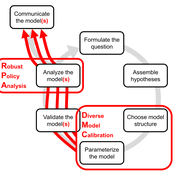
DMC-RPA: Diverse Model Calibration for Robust Policy Analysis (applied to an ABM of smallholder farmer resilience)
Tim Williams | Published Sunday, August 30, 2020This repository contains: (1) a model calibration procedure that identifies a set of diverse, plausible models; and (2) an ABM of smallholder agriculture, which is used as a case study application for the calibration method. By identifying a set of diverse models, the calibration method attends to the issue of “equifinality” prevalent in complex systems, which is a situation where multiple plausible process descriptions exist for a single outcome.
One Signal, Many Feeds: An Empirical-Response Agent-Based Model of Coordination Failure in Algorithmic Creator Discovery
Haocheng Wang | Published Thursday, August 06, 2026An empirical-response agent-based model of how many personalized feeds execute a shared low-exposure creator-discovery objective. Built from the KuaiRec dataset: the big interaction matrix initializes a transparent rank-8 matrix-factorization platform learner and the activity schedule, while the near-complete small matrix returns observed viewing responses only after a user-video pair is exposed. Four exploration policies (synchronous low-exposure targeting, uniform exploration, per-user random tie-breaking, capacity-balanced coordination) are compared over 28 rounds at a nominal 10% exploration budget, across 30 paired seeds (core) and 10 paired seeds (bias-only probe), with slot-level redundancy, cross-user collision, and coverage diagnostics.
This release accompanies an anonymised manuscript under review at the Journal of Artificial Societies and Social Simulation.
The model represents 1,411 users, 3,327 videos, 2,031 authors, and an adaptive platform over 28 discrete rounds derived from the KuaiRec big-matrix activity calendar. Exploration policies differ only in how a fixed 10% slot budget is allocated; all policies share the opportunity schedule, response oracle, initial checkpoints, and online update rule.
Archive contents: analysis pipeline scripts (01-16), frozen machine-readable protocols with input hashes, initial model checkpoints, aggregate result tables, the complete ODD protocol record, and publication figures. Raw KuaiRec files are not redistributed; obtain them from the official dataset repository and verify against the input hashes in data_contract/. Row-level oracle tables are excluded by design.
…
A simple Multi-Agent System of the Tragedy Of the Commons (MASTOC-s)
Julia Schindler | Published Friday, June 29, 2012 | Last modified Saturday, April 27, 2013This is a simple model replicating Hardin’s Tragedy of the Commons using reactive agents that have psychological behavioral and social preferences.
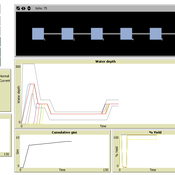
The MOBILITY model analyzes how agents’ mobility affects the performance of social-ecological systems in different landscape configurations.
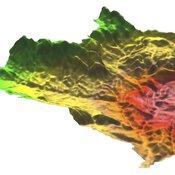
MedLanD Modeling Laboratory
C Michael Barton Sean Bergin Isaac Ullah Gary Mayer Hessam Sarjoughian Helena Mitasova | Published Friday, May 08, 2015 | Last modified Thursday, December 14, 2017The MML is a hybrid modeling environment that couples an agent-based model of small-holder agropastoral households and a cellular landscape evolution model that simulates changes in erosion/deposition, soils, and vegetation.
Cooperation Under Resources Pressure (CURP)
María Pereda José Manuel Galán Ordax José Santos | Published Monday, November 21, 2016 | Last modified Wednesday, April 25, 2018This is an agent-based model designed to explore the evolution of cooperation under changes in resources availability for a given population
Opinion Dynamics with various confidence distributions
Jonas Lindblad | Published Friday, September 28, 2018Project for the course “Introduction to Agent-Based Modeling”.
The NetLogo model implements an Opinion Dynamics model with different confidence distributions, inspired by the Bounded Confidence model presented by Hegselmann and Krause in 2002. Hegselmann and Krause used a model with uniform distribution of confidence, but one could imagine agents that are more confident in their own opinions than others. Confidence with triangular, semi-circular, and Gaussian distributions are implemented. Moreover, network structure is optional and can be taken into account in the agent’s confidence such that agents assign less confidence the further away from them other agents are.
Simulating Water, Individuals, and Management (SWIM)
John Murphy | Published Friday, July 05, 2019SWIM is a simulation of water management, designed to study interactions among water managers and customers in Phoenix and Tucson, Arizona. The simulation can be used to study manager interaction in Phoenix, manager and customer messaging and water conservation in Tucson, and when coupled to the Water Balance Model (U New Hampshire), impacts of management and consumer choices on regional hydrology.
Publications:
Murphy, John T., Jonathan Ozik, Nicholson T. Collier, Mark Altaweel, Richard B. Lammers, Alexander A. Prusevich, Andrew Kliskey, and Lilian Alessa. “Simulating Regional Hydrology and Water Management: An Integrated Agent-Based Approach.” Winter Simulation Conference, Huntington Beach, CA, 2015.
Potato late blight model
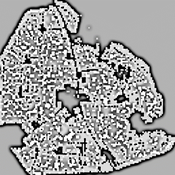
Francine Pacilly | Published Friday, April 13, 2018The purpose of the model is to simulate the spatial dynamics of potato late blight to analyse whether resistant varieties can be used effectively for sustainable disease control. The model represents an agricultural landscape with potato fields and data of a Dutch agricultural region is used as input for the model. We simulated potato production, disease spread and pathogen evolution during the growing season (April to September) for 36 years. Since late blight development and crop growth is weather dependent, measured weather data is used as model input. A susceptible and late blight resistant potato variety are distinguished. The resistant variety has a potentially lower yield but cannot get infected with the disease. However, during the growing season virulent spores can emerge as a result of mutations during spore production. This new virulent strain is able to infect the resistant fields, resulting in resistance breakdown. The model shows how disease severity, resistance durability and potato yield are affected by the fraction of fields across a landscape with a disease-resistant potato variety.
Displaying 10 of 994 results for "Jan Buurma" clear search