Our mission is to help computational modelers develop, document, and share their computational models in accordance with community standards and good open science and software engineering practices. Model authors can publish their model source code in the Computational Model Library with narrative documentation as well as metadata that supports open science and emerging norms that facilitate software citation, computational reproducibility / frictionless reuse, and interoperability. Model authors can also request private peer review of their computational models. Models that pass peer review receive a DOI once published.
All users of models published in the library must cite model authors when they use and benefit from their code.
Please check out our model publishing tutorial and feel free to contact us if you have any questions or concerns about publishing your model(s) in the Computational Model Library.
Displaying 10 of 70 results for "Gary Mayer" clear search
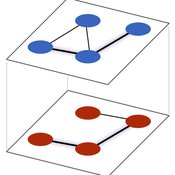
Network formation on a two-layer multiplex with shocks
Paul Smaldino | Published Monday, November 27, 2017A dynamic model of social network formation on single-layer and multiplex networks with structural incentives that vary over time.
A double-layer network and the contagion mechanism of China’s financial systemic risk
zou | Published Tuesday, August 13, 2019We establish a double-layer network for China’s financial system, consisting of an interbank lending network and a cross-shareholding network. The loss of diffusion in an interbank lending channel independently, a cross-shareholding channel independently and a double-layer contagion channel after one of the financial institutions goes bankrupt with an initial shock are simulated to explore the nonlinear evolution mechanism of financial risk and impact factors of financial systemic risk in China.
Agent based model of COVID19 spread with digital contact tracing
Stefano Picascia Jonatan Almagor | Published Tuesday, September 28, 2021 | Last modified Wednesday, October 13, 2021Multi-layer network agent-based model of the progression of the COVID19 infection, digital contact tracing
A Benchmark Test for LLM Persona Agents in a Macroeconomic Simulation
Taewan You | Published Thursday, October 08, 2026This model couples a two-asset heterogeneous-agent New Keynesian macroeconomy with a household layer that can be driven in two ways. One is a conventional calibration. The other is a set of large-language-model persona agents built from real survey households in Korea (NaSTaB), the United States (PSID) and Italy (SHIW). Each persona is given its balance sheet, income and prices, and reports consumption, saving and labour supply. A feasibility layer enforces the budget constraint. A conditional-mean surrogate then turns these decisions into a propensity surface. That surface reaches the macroeconomic block through a single channel, the intertemporal marginal propensity to consume matrix. Because of this, a calibrated “twin” can be aligned with the generative layer exactly, and the two can be compared policy by policy.
Both layers are then scored against the held-out consumption of the same households. The model’s role is to serve as a benchmark: it tests whether generative agents add information beyond the balance sheet, and whether that information matches real behaviour.
The deposit contains:
…
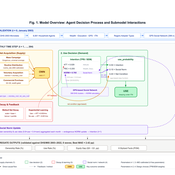
Peer reviewed Kenya ITN Agent-Based Microsimulation (2003–2024)
Wooyoung Kim Hosang Shin | Published Saturday, April 18, 2026 | Last modified Tuesday, June 16, 2026An agent-based microsimulation of insecticide-treated net (ITN) distribution and adoption in Kenya (2003–2024), integrating the Theory of Planned Behaviour, Rogers diffusion, Weibull net decay, and a GPS-based two-layer social network. 8,561 household agents calibrated via Approximate Bayesian Computation to six DHS/MIS survey waves, achieving 2.42 pp mean absolute error on Kenya-level ownership. The analysis chain supports mechanism counterfactuals and policy experiments on equity outcomes of ITN distribution strategies.
Open Peer Review Model
Federico Bianchi | Published Monday, May 24, 2021This is an agent-based model of a population of scientists alternatively authoring or reviewing manuscripts submitted to a scholarly journal for peer review. Peer-review evaluation can be either ‘confidential’, i.e. the identity of authors and reviewers is not disclosed, or ‘open’, i.e. authors’ identity is disclosed to reviewers. The quality of the submitted manuscripts vary according to their authors’ resources, which vary according to the number of publications. Reviewers can assess the assigned manuscript’s quality either reliably of unreliably according to varying behavioural assumptions, i.e. direct/indirect reciprocation of past outcome as authors, or deference towards higher-status authors.
NRDCPI v17.0 — NATO-Russia Direct Conflict Probability Index
Edward Ozhiganov | Published Thursday, September 03, 2026This model implements a bidirectional coupling between micro-level agent decisions and macro-level system dynamics, with an additional diagnostic layer based on Stafford Beer’s Viable System Model.
Key features:
- Six types of agents (Household, Firm, Bank, Government, Foreign, Innovation)
- Continuous SDM core integrated with Runge-Kutta 4
- Robust GDELT data handling with multi-level fallback
…
Catch Me if You Can: Using a Threshold Model to Simulate Support for Presidential Candidates in the Invisible Primary
Elizabeth Stiles | Published Wednesday, November 14, 2018We use a threshold model to drive our simulated network analysis testing public support for candidates in invisible primaries. We assign voter thresholds for candidates and vary number of voters, attachment to candidates and decay. Results of the algorithm show effects of size of lead, attachment and size of decay.
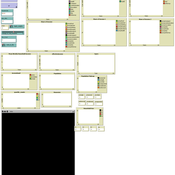
Income Model
Tony Lawson | Published Monday, August 26, 2013This is the code for the model described in an article in the International Journal of Microsimulation. Lawson (2013) ‘Modelling Household Spending Using a Random Assignment Scheme’, International Journal of Microsimulation, 6(2) Autumn 2013, 56-75.
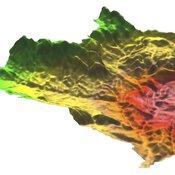
MedLanD Modeling Laboratory
C Michael Barton Sean Bergin Isaac Ullah Gary Mayer Hessam Sarjoughian Helena Mitasova | Published Friday, May 08, 2015 | Last modified Thursday, December 14, 2017The MML is a hybrid modeling environment that couples an agent-based model of small-holder agropastoral households and a cellular landscape evolution model that simulates changes in erosion/deposition, soils, and vegetation.
Displaying 10 of 70 results for "Gary Mayer" clear search