Our mission is to help computational modelers develop, document, and share their computational models in accordance with community standards and good open science and software engineering practices. Model authors can publish their model source code in the Computational Model Library with narrative documentation as well as metadata that supports open science and emerging norms that facilitate software citation, computational reproducibility / frictionless reuse, and interoperability. Model authors can also request private peer review of their computational models. Models that pass peer review receive a DOI once published.
All users of models published in the library must cite model authors when they use and benefit from their code.
Please check out our model publishing tutorial and feel free to contact us if you have any questions or concerns about publishing your model(s) in the Computational Model Library.
Displaying 10 of 1030 results for "P Van Geert" clear search
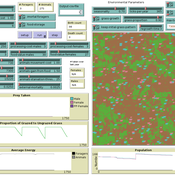
Peer reviewed The Megafauna Hunting Pressure Model
Isaac Ullah Miriam C. Kopels | Published Friday, February 16, 2024 | Last modified Friday, October 11, 2024The Megafaunal Hunting Pressure Model (MHPM) is an interactive, agent-based model designed to conduct experiments to test megaherbivore extinction hypotheses. The MHPM is a model of large-bodied ungulate population dynamics with human predation in a simplified, but dynamic grassland environment. The overall purpose of the model is to understand how environmental dynamics and human predation preferences interact with ungulate life history characteristics to affect ungulate population dynamics over time. The model considers patterns in environmental change, human hunting behavior, prey profitability, herd demography, herd movement, and animal life history as relevant to this main purpose. The model is constructed in the NetLogo modeling platform (Version 6.3.0; Wilensky, 1999).
Peer reviewed Random Vs Expert movement simulation for different bird groups in Bogota, Colombia
Martin Otalora-Low | Published Thursday, November 05, 2026 | Last modified Thursday, November 12, 2026The model’s primary aim was not to be entirely realistic; instead, it was designed to point to new questions, test the usefulness of the tool, and lay the groundwork for new insights. As such, this model is targeted at ecologists, ornithologists, and urban planners who want to test and simulate how different birds face the challenge of a densely urbanized city that aims to enhance its natural connectivity and foster a wide range of biodiversity. We aimed to identify bird movement at the city-wide scale, encompassing representatives from the entire avian community, while examining differences in movement between totally random models and an informed model, defined by expert criteria.
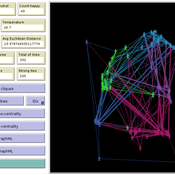
Cellular automata model of social networks
Rubens de Almeida Zimbres | Published Tuesday, August 02, 2022This project was developed during the Santa Fe course Introduction to Agent-Based Modeling 2022. The origin is a Cellular Automata (CA) model to simulate human interactions that happen in the real world, from Rubens and Oliveira (2009). These authors used a market research with real people in two different times: one at time zero and the second at time zero plus 4 months (longitudinal market research). They developed an agent-based model whose initial condition was inherited from the results of the first market research response values and evolve it to simulate human interactions with Agent-Based Modeling that led to the values of the second market research, without explicitly imposing rules. Then, compared results of the model with the second market research. The model reached 73.80% accuracy.
In the same way, this project is an Exploratory ABM project that models individuals in a closed society whose behavior depends upon the result of interaction with two neighbors within a radius of interaction, one on the relative “right” and other one on the relative “left”. According to the states (colors) of neighbors, a given cellular automata rule is applied, according to the value set in Chooser. Five states were used here and are defined as levels of quality perception, where red (states 0 and 1) means unhappy, state 3 is neutral and green (states 3 and 4) means happy.
There is also a message passing algorithm in the social network, to analyze the flow and spread of information among nodes. Both the cellular automaton and the message passing algorithms were developed using the Python extension. The model also uses extensions csv and arduino.
Emergent Collapse and Resilience in Sequential Task Networks
Antonis Chatzipanagiotou | Published Monday, August 31, 2026Organizations operate under conditions of imperfect performance in which human error is inevitable, yet errors are rarely examined as the triggers for the managerial interactions that shape organizational culture over time. The present research introduces an agent-based simulation of a work team completing a fixed sequence of tasks under varying degrees of managerial oversight and response policy. The model isolates the mechanical loss of throughput caused by errors from the psychological and cultural consequences of managerial reactions, which are categorized into ignoring, correcting or punishing. Furthermore, the model incorporates an autonomous self-notice mechanism, allowing workers to correct themselves in the absence of managerial intervention. By tracking the accumulation of worker resentment and the transient enhancements in learning, the simulation acts as a dynamic laboratory for observing delayed consequences, nonlinear tipping points and systemic organizational collapse. The results reveal a central paradox of organizational control. Highly monitored punitive environments generate high short-term throughput, yet they simultaneously accumulate interactional injustice and resentment that engineer a rapid cascading turnover and the highest probability of systemic collapse. Conversely, corrective policies combined with active monitoring achieve equivalent throughput while sustaining workforce viability. A comprehensive sensitivity analysis establishes that error accumulation is primarily determined by structural factors, namely agent-level mistake propensity and task difficulty, while resignation dynamics, resentment accumulation and collapse timing remain predominantly governed by managerial policy, a hierarchy independently corroborated by a surrogate model and shown to be stable across independent seeds and across stakeholder weighting scenarios. The study bridges the operational mechanics of task completion and the social dynamics of workplace mistreatment, illustrating how short-term punitive success often masks long-term structural fragility.
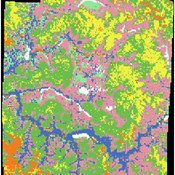
Peer reviewed Ache hunting
Marco Janssen Kim Hill | Published Tuesday, August 13, 2013 | Last modified Friday, December 21, 2018Agent-based model of hunting behavior of Ache hunter-gatherers from Paraguay. We evaluate the effect of group size and cooperative hunting
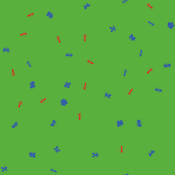
Foundress dilemma model
Zachary Joseph Shaffer Takao Sasaki Brian Haney Marco Janssen Stephen Pratt Jennifer Fewell | Published Thursday, July 28, 2016A haystack-style model of group selection to capture the essential features of colony foundation for queens of the ant based on observation of the ant Pogonomyrmex californicus.
Peninsula_Iberica 1.0
Carolina Cucart-Mora Sergi Lozano Javier Fernández-López De Pablo | Published Friday, November 04, 2016 | Last modified Monday, November 27, 2017This model was build to explore the bio-cultural interaction between AMH and Neanderthals during the Middle to Upper Paleolithic Transition in the Iberian Peninsula
Modeling the decline of labor-sharing in highly variable environments
Andres Baeza-Castro Marco Janssen | Published Tuesday, April 02, 2019The rapid environmental changes currently underway in many dry regions of the world, and the deep uncertainty about their consequences, underscore a critical challenge for sustainability: how to maintain cooperation that ensures the provision of natural resources when the benefits of cooperating are variable, sometimes uncertain, and often limited. We present an agent-based model that simulates the economic decisions of households to engage, or not, in labor-sharing agreements under different scenarios of water supply, water variability, and socio-environmental risk. We formulate the model to investigate the consequences of environmental variability on the fate of labor-sharing agreements between farmers. The economic decisions were implemented in the framework of prospect theory.
Peer reviewed The OctoPINTS Model: Periodic octopus closures
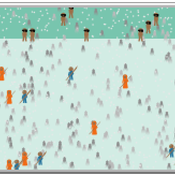
Emilie Lindkvist Elizabeth Drury O'Neill Tim M Daw Maja Schlüter Jineth Berrío-Martínez Benedetta Veneroni | Published Wednesday, April 20, 2022 | Last modified Monday, November 23, 2026The purpose of the model is to explore how processes associated with compliance across different fishery actors’ social groups interplay with their acceptance of a fishery intervention, herein periodic closures of a small-scale octopus fishery. The model agents, entities and processes are designed based on stylized facts from literature and expert workshops on periodic closures in the Western Indian Ocean region, as well as fieldwork from Zanzibari villages that have implemented periodic octopus closures. The model is designed for scientists, decision-makers and students that are interested in understanding the complex interplay between fishers from different social groups, herein foot fisher men, foot fisher women and male divers within the periodic closure of an octopus species.
Simulating Social Interaction in Times of COVID Restrictions
Oscar de Vries | Published Friday, November 17, 2023Social distancing is a strategy to mitigate the spread of contagious disease, but it bears negative impacts on people’s social well-being, resulting in non-compliance. This paper uses an integrated behavioral simulation model, called HUMAT, to identify a sweet spot
that balances strictness of and obedience to social distancing rules.
A novel agent-based model was developed that aims to explore social interaction while it is constrained by visitor limitations (due to Dutch COVID measures). Specifically, the model aims to capture the interaction between the need for social contact and the support for the visitors measure. The model was developed using the HUMAT integrated framework, which offered a psychological and sociological foundation for the behavior of the agents.
Displaying 10 of 1030 results for "P Van Geert" clear search