Our mission is to help computational modelers develop, document, and share their computational models in accordance with community standards and good open science and software engineering practices. Model authors can publish their model source code in the Computational Model Library with narrative documentation as well as metadata that supports open science and emerging norms that facilitate software citation, computational reproducibility / frictionless reuse, and interoperability. Model authors can also request private peer review of their computational models. Models that pass peer review receive a DOI once published.
All users of models published in the library must cite model authors when they use and benefit from their code.
Please check out our model publishing tutorial and feel free to contact us if you have any questions or concerns about publishing your model(s) in the Computational Model Library.
Displaying 10 of 213 results abm clear search
Peer reviewed Vigilant sharing in a small-scale society
Marcos Pinheiro | Published Wednesday, July 22, 2020 | Last modified Wednesday, July 29, 2020The model explores food distribution patterns that emerge in a small-scale non-agricultural group when sharing individuals engage in intentional consumption leveling with a given probability.
Agent Based Integrated Assessment Model
Marcin Czupryna | Published Saturday, June 27, 2020Agent based approach to the class of the Integrated Assessment Models. An agent-based model (ABM) that focuses on the energy sector and climate relevant facts in a detailed way while being complemented with consumer goods, labour and capital markets to a minimal necessary extent.
An agent-based model of building occupant behavior during load shedding
Handi Chandra Putra | Published Thursday, May 21, 2020Load shedding enjoys increasing popularity as a way to reduce power consumption in buildings during hours of peak demand on the electricity grid. This practice has well known cost saving and reliability benefits for the grid, and the contracts utilities sign with their “interruptible” customers often pass on substantial electricity cost savings to participants. Less well-studied are the impacts of load shedding on building occupants, hence this study investigates those impacts on occupant comfort and adaptive behaviors. It documents experience in two office buildings located near Philadelphia (USA) that vary in terms of controllability and the set of adaptive actions available to occupants. An agent-based model (ABM) framework generalizes the case-study insights in a “what-if” format to support operational decision making by building managers and tenants. The framework, implemented in EnergyPlus and NetLogo, simulates occupants that have heterogeneous
thermal and lighting preferences. The simulated occupants pursue local adaptive actions such as adjusting clothing or using portable fans when central building controls are not responsive, and experience organizational constraints, including a corporate dress code and miscommunication with building managers. The model predicts occupant decisions to act fairly well but has limited ability to predict which specific adaptive actions occupants will select.
Peer review model with heterogeneous grade language
Pablo Lucas Thomas Feliciani Ramanathan Moorthy Kalpana Shankar | Published Thursday, May 07, 2020This ABM re-implements and extends the simulation model of peer review described in Squazzoni & Gandelli (Squazzoni & Gandelli, 2013 - doi:10.18564/jasss.2128) (hereafter: ‘SG’). The SG model was originally developed for NetLogo and is also available in CoMSES at this link.
The purpose of the original SG model was to explore how different author and reviewer strategies would impact the outcome of a journal peer review system on an array of dimensions including peer review efficacy, efficiency and equality. In SG, reviewer evaluation consists of a continuous variable in the range [0,1], and this evaluation scale is the same for all reviewers. Our present extension to the SG model allows to explore the consequences of two more realistic assumptions on reviewer evaluation: (1) that the evaluation scale is discrete (e.g. like in a Likert scale); (2) that there may be differences among their interpretation of the grades of the evaluation scale (i.e. that the grade language is heterogeneous).
Community Forest Management with Monitoring and Sanctioning
Maya Lapp Colby Long | Published Wednesday, April 29, 2020 | Last modified Friday, July 23, 2021This NetLogo ABM builds on Elena Vallino’s model of Loggers using community-based natural resource management for a forest ecosystem. In it we introduce an alternative mechanism for Logger cheating and enforcement of CBNRM rules.
COVID-19 ABM
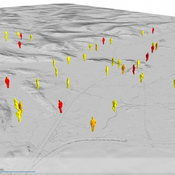
Gudrun Wallentin | Published Tuesday, April 21, 2020 | Last modified Tuesday, April 21, 2020Model of the Corona pandemic outbreak
The COVID-19 ABM aims to predict the qualitative behaviour of the CoViD-19 epidemic dynamics for the greater region of Salzburg City. Specifically, by means of scenario testing, it aims to help assessing how containment interventions can allow a stepwise relaxation of the lockdown without risking a new outbreak.
Peer reviewed FIBE - FIsher BEhaviour model
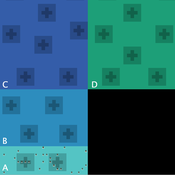
Nanda Wijermans Maja Schlüter Kirill Orach Wijnand Boonstra Jonas Hentati-Sundberg | Published Monday, April 20, 2020FIBE represents a simple fishery model. Fish that reproduce and fisher with different fishing styles that fish as their main source of income. The aim of the model is to reflect the different fishing behaviours as described and observed in the (Swedish) Baltic Sea fishery and explore the consequences of different approximations of human/fisher behaviour in under different environmental and managerial scenarios.
The overarching aim is to advance the incorporation and understanding of human behaviour (diversity) in fisheries research and management. In particular focusing on insights from social (fishery) science of fisher behaviour.
AncientS-ABM: Agent-Based Modeling of Past Societies Social Organization
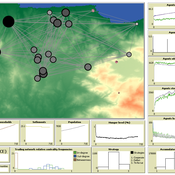
Angelos Chliaoutakis | Published Thursday, April 09, 2020AncientS-ABM is an agent-based model for simulating and evaluating the potential social organization of an artificial past society, configured by available archaeological data. Unlike most existing agent-based models used in archaeology, our ABM framework includes completely autonomous, utility-based agents. It also incorporates different social organization paradigms, different decision-making processes, and also different cultivation technologies used in ancient societies. Equipped with such paradigms, the model allows us to explore the transition from a simple to a more complex society by focusing on the historical social dynamics; and to assess the influence of social organization on agents’ population growth, agent community numbers, sizes and distribution.
AncientS-ABM also blends ideas from evolutionary game theory with multi-agent systems’ self-organization. We model the evolution of social behaviours in a population of strategically interacting agents in repeated games where they exchange resources (utility) with others. The results of the games contribute to both the continuous re-organization of the social structure, and the progressive adoption of the most successful agent strategies. Agent population is not fixed, but fluctuates over time, while agents in stage games also receive non-static payoffs, in contrast to most games studied in the literature. To tackle this, we defined a novel formulation of the evolutionary dynamics via assessing agents’ rather than strategies’ fitness.
As a case study, we employ AncientS-ABM to evaluate the impact of the implemented social organization paradigms on an artificial Bronze Age “Minoan” society, located at different geographical parts of the island of Crete, Greece. Model parameter choices are based on archaeological evidence and studies, but are not biased towards any specific assumption. Results over a number of different simulation scenarios demonstrate better sustainability for settlements consisting of and adopting a socio-economic organization model based on self-organization, where a “heterarchical” social structure emerges. Results also demonstrate that successful agent societies adopt an evolutionary approach where cooperation is an emergent strategic behaviour. In simulation scenarios where the natural disaster module was enabled, we observe noticeable changes in the settlements’ distribution, relating to significantly higher migration rates immediately after the modeled Theran eruption. In addition, the initially cooperative behaviour is transformed to a non-cooperative one, thus providing support for archaeological theories suggesting that the volcanic eruption led to a clear breakdown of the Minoan socio-economic system.
…
A simple model that aims to demonstrate the influence of agri-environmental payments on land-use patterns in a virtual landscape. The landscape consists of grassland (which can be managed extensively or intensively) and a river. Agri-environmental payments are provided for extensive management of grassland. Additionally, there are boni for (a) extensive grassland in proximity of the river; and (b) clusters (“agglomerations”) of extensive grassland. The farmers, who own randomly distributed grassland patches, make decisions either on the basis of simple income maximization or they maximize only up to an income threshold beyond which they seize making changes in management. The resulting landscape pattern is evaluated by means of three simple models for (a) agricultural yield, (b) habitat/biodiversity and (c) water quality. The latter two correspond to the two boni. The model has been developed within a small project called Aligning Agent-Based Modelling with Multi-Objective Land-Use Allocation (ALABAMA).
WatASit
Bastien RICHARD Bastien Richard Isabelle Braud Bruno Bonté Olivier Barreteau | Published Friday, December 20, 2019 | Last modified Wednesday, October 28, 2020WatASit is an agent-based model implemented in the CORMAS plateform. The model is developped to simulate irrigation situations at the operational level during a collective irrigation campaign.
Displaying 10 of 213 results abm clear search