Our mission is to help computational modelers develop, document, and share their computational models in accordance with community standards and good open science and software engineering practices. Model authors can publish their model source code in the Computational Model Library with narrative documentation as well as metadata that supports open science and emerging norms that facilitate software citation, computational reproducibility / frictionless reuse, and interoperability. Model authors can also request private peer review of their computational models. Models that pass peer review receive a DOI once published.
All users of models published in the library must cite model authors when they use and benefit from their code.
Please check out our model publishing tutorial and feel free to contact us if you have any questions or concerns about publishing your model(s) in the Computational Model Library.
Displaying 10 of 25 results for "Carol El-Hayek" clear search
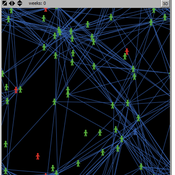
Eliminating hepatitis C virus as a public health threat among HIV-positive men who have sex with men
Nick Scott Mark Stoove David P Wilson Olivia Keiser Carol El-Hayek Joseph Doyle Margaret Hellard | Published Wednesday, October 12, 2016 | Last modified Sunday, December 16, 2018We compare three model estimates for the time and treatment requirements to eliminate HCV among HIV-positive MSM in Victoria, Australia: a compartmental model; an ABM parametrized by surveillance data; and an ABM with a more heterogeneous population.
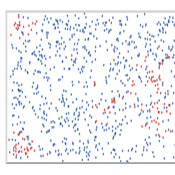
Vacunación-Covid Ecuador
Adrian Lara | Published Tuesday, March 22, 2022El modelo a continuación, fue desarrollado para el DATA CHALLENGE 2022. Es un análisis de la información descargada del Portal de datos abiertos de Ecuador. Dentro del modelo podemos realizar una breve exploración de la información así como una simulación respecto al proceso de vacunación en Ecuador.
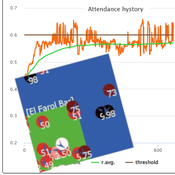
Peer reviewed Flibs’NFarol: Self-Organized Efficiency and Fairness Emergence in an Evolutive Game
Cosimo Leuci | Published Thursday, October 12, 2023According to the philosopher of science K. Popper “All life is problem solving”. Genetic algorithms aim to leverage Darwinian selection, a fundamental mechanism of biological evolution, so as to tackle various engineering challenges.
Flibs’NFarol is an Agent Based Model that embodies a genetic algorithm applied to the inherently ill-defined “El Farol Bar” problem. Within this context, a group of agents operates under bounded rationality conditions, giving rise to processes of self-organization involving, in the first place, efficiency in the exploitation of available resources. Over time, the attention of scholars has shifted to equity in resource distribution, as well. Nowadays, the problem is recognized as paradigmatic within studies of complex evolutionary systems.
Flibs’NFarol provides a platform to explore and evaluate factors influencing self-organized efficiency and fairness. The model represents agents as finite automata, known as “flibs,” and offers flexibility in modifying the number of internal flibs states, which directly affects their behaviour patterns and, ultimately, the diversity within populations and the complexity of the system.
GFN & Technology Models Library (2025–2035)
natalya-pushkareva | Published Tuesday, September 15, 2026GFN & Technology Models Library (2025–2035) is a collection of four interrelated computational models focused on global financial networks, cascading default risks, technological development, and technological lag, with particular attention to Russia, the USA, and China. The library combines agent-based modeling, system dynamics, Monte-Carlo simulation, and network analysis. It includes: (1) a Numba-accelerated Monte-Carlo technology index model; (2) a hybrid GFN + cascading defaults (Gai–Kapadia) + Russian system dynamics model; (3) a twin-simulation GFN+SBS framework with selective bailout and Russia’s peripheral position; and (4) an endogenous GFN model with technology centrality, dependence, and tech lag dynamics under sanctions scenarios. GFN & Technology Models Library (2025–2035) is a collection of four interrelated computational models focused on global financial networks, cascading default risks, technological development, and technological lag, with particular attention to Russia, the USA, and China.
The library combines agent-based modeling, system dynamics, Monte-Carlo simulation, and network analysis. It includes:
- Technology Index 2035 (Monte-Carlo + Numba) — hybrid SD/ABM model projecting a composite technology index under different scenarios (Russia baseline, China, USA) with aggressive Numba optimization.
- RUS-GFN-TSI-2035 CASCADE — hybrid model integrating a Gai–Kapadia-style cascading defaults network, an agent-based Global Financial Network layer, and a system-dynamics module for the Russian economy (TSI, inflation, technology, trust, etc.).
…
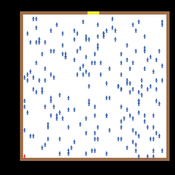
This model was design to test parameters that affects the number of people shot during mass shooting. This basic formulation places a gunman in a crowd and allows the users to manipulate parameters of the gunman.
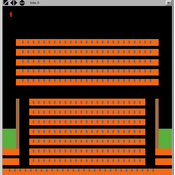
On July 20th, James Holmes committed a mass shooting in a midnight showing of The Dark Knight Rises. The Aurora Colorado shooting was used as a test case to validate this framework for modeling mass shootings.
Fragile, Resilient, Asymmetric: An Agent-Based Stress Test of European Cooperation under Geopolitical Shocks (2024–2040)
Alessandro Brugnoletti | Published Tuesday, August 25, 2026Agent-based model of cooperation among fourteen EU member states under geopolitical shocks, 2024-2040. States are adaptive agents on the observed intra-EU trade network, updating a cooperation propensity through inertia, network influence, and a repeated-game payoff structure built from verified Eurostat, Eurobarometer and IMF data. An anchoring device makes the observed 2024 configuration exactly stationary absent shocks, so results are read as deviations from an empirical baseline. Five scenarios of increasing severity are simulated with Monte Carlo replication, up to an extreme counterfactual crisis in the Taiwan Strait. Includes six robustness batteries and a full ODD description.
A Pastoral Stoking Strategy Model with Fodder Import and Loan Scenarios
Yanbo Li | Published Tuesday, December 24, 2019This model was built to estimate the impacts of exogenous fodder input and credit loans services on livelihood, rangeland health and profits of pastoral production in a small holder pastoral household in the arid steppe rangeland of Inner Mongolia, China. The model simulated the long-term dynamic of herd size and structure, the forage demand and supply, the cash flow, and the situation of loan debt under three different stocking strategies: (1) No external fodder input, (2) fodders were only imported when natural disaster occurred, and (3) frequent import of external fodder, with different amount of available credit loans. Monte-Carlo method was used to address the influence of climate variability.
Structural Violence and Neurobiological Adaptation: Modeling the Trajectory of Youth Outside of Care
masterpiece33330-prog | Published Thursday, November 27, 2025This study presents a System Dynamics (SD) model that explores the “trajectories of homelessness” among youth outside of the formal care system. Unlike traditional approaches that view runaway behavior as a discrete choice, this model reinterprets it as a neurobiological adaptation to chronic resource deprivation and systemic neglect.
The model incorporates key mechanisms such as ‘Allostatic Load’ accumulation, ‘PFC-Amygdala Switching’, and the ‘Iatrogenic Effects’ of shelter policies. It utilizes Monte Carlo simulations to demonstrate how structural factors create a “probabilistic vulnerability,” trapping youth in cycles of survival crime and isolation regardless of individual resilience.
The uploaded code includes a Python implementation of the model to ensure reproducibility of the stochastic analysis presented in the paper.
Emergency Warning Dissemination in a Multiplex Social Network
Charles Koll | Published Tuesday, January 31, 2023This is an interdisciplinary agent-based model with Monte Carlo simulations to assess the relative effects of broadcast and contagion processes in a multiplex social network. This multiplex approach models multiple channels of informal communication - phone, word-of-mouth, and social media - that vary in their attribute values. Each agent is an individual in a threatened community who, once warned, has a probability of warning others in their social network using one of these channels. The probability of an individual warning others is based on their warning source and the time remaining until disaster impact, among other variables. Default parameter values were chosen from empirical studies of disaster warnings along with the spatial aspects of Coos Bay, OR, USA and Seaside, OR, USA communities.
Displaying 10 of 25 results for "Carol El-Hayek" clear search