Our mission is to help computational modelers develop, document, and share their computational models in accordance with community standards and good open science and software engineering practices. Model authors can publish their model source code in the Computational Model Library with narrative documentation as well as metadata that supports open science and emerging norms that facilitate software citation, computational reproducibility / frictionless reuse, and interoperability. Model authors can also request private peer review of their computational models. Models that pass peer review receive a DOI once published.
All users of models published in the library must cite model authors when they use and benefit from their code.
Please check out our model publishing tutorial and feel free to contact us if you have any questions or concerns about publishing your model(s) in the Computational Model Library.
Displaying 10 of 1163 results for "Bin-Tzong Chi" clear search
Exploration and Exploitation in Parallel Problem Solving Effect of Agent’s Imitation Strategy
Hua Zhang | Published Saturday, June 27, 2009 | Last modified Saturday, April 27, 2013I extend Lazer’s model by adding agent’s two kinds of imitation strategies: selective imitation and structurally equivalent imitation. I examined the effect of interaction of network with agent behavi
Evaluating Government's Policies on Promoting Smart Metering Diffusion in Retail Electricity Markets
Tao Zhang | Published Monday, December 07, 2009 | Last modified Saturday, April 27, 2013This model is a market game for evaluating the effectiveness of the UK government’s 2008-2010 policy on promoting smart metering in the UK retail electricity market. We break down the policy into four
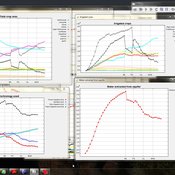
A model of groundwater usage by farmers in the Upper Guadiana, Spain
Georg Holtz | Published Thursday, June 30, 2011 | Last modified Saturday, April 27, 2013An agent-based model to investigate the history of irrigated agriculture in the Upper Guadiana Basin, Spain, in order to learn about the influence of farmers’ characteristics (inter alia profit orientation, risk aversion, skills, available labour force and farm size) on land-use change and associated groundwater over-use in this region.
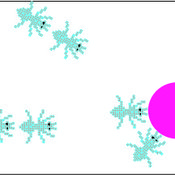
Linear recruitment leads to allocation and flexibility in collective foraging by ants
Takao Sasaki Zachary Joseph Shaffer Stephen Pratt | Published Thursday, July 11, 2013 | Last modified Thursday, September 05, 2013Ants in the genus Temnothorax use tandem runs (rather than pheromone trails) to recruit to food sources. This model explores the collective consequences of this linear recruitment (as opposed to highly nonlinear pheromone trails).
A Mathematical Model of The Beer Game Coded in R for Verification
Hakan Yasarcan Mert Edali | Published Wednesday, November 05, 2014This is the R code of the mathematical model used for verification. This code corresponds to equations 1-9, 15-53, 58-62, 69-70, and 72-75 given in the paper “A Mathematical Model of The Beer Game”.

Thoughtless conformity and spread of norms in an artificial society (Grid Model)
Muhammad Azfar Nisar | Published Tuesday, May 27, 2014This model is a small extension (rectangular layout) of Joshua Epstein’s (2001) model on development of thoughtless conformity in an artificial society of agents.
An Agent-Based DSS for Word-of-Mouth Programs in Freemium Apps
Manuel Chica | Published Monday, September 05, 2016An agent-based framework that aggregates social network-level individual interactions to run targeting and rewarding programs for a freemium social app. Git source code in https://bitbucket.org/mchserrano/socialdynamicsfreemiumapps
Generalized Trust in the Mirror - a model on the Dynamics of Trust
Dominik Klein Johannes Marx | Published Friday, January 12, 2018This model studies the emergence and dynamics of generalized trust. It does so by modeling agents that engage in trust games and, based on their experience, slowly determine whether others are, in general, trustworthy.
VIDA: A simulation model of domestic VIolence in times of social DistAncing
Bernardo Furtado | Published Monday, January 11, 2021Violence against women occurs predominantly in the family and domestic context. The COVID-19 pandemic led Brazil to recommend and, at times, impose social distancing, with the partial closure of economic activities, schools, and restrictions on events and public services. Preliminary evidence shows that intense co- existence increases domestic violence, while social distancing measures may have prevented access to public services and networks, information, and help. We propose an agent-based model (ABM), called VIDA, to illustrate and examine multi-causal factors that influence events that generate violence. A central part of the model is the multi-causal stress indicator, created as a probability trigger of domestic violence occurring within the family environment. Two experimental design tests were performed: (a) absence or presence of the deterrence system of domestic violence against women and measures to increase social distancing. VIDA presents comparative results for metropolitan regions and neighbourhoods considered in the experiments. Results suggest that social distancing measures, particularly those encouraging staying at home, may have increased domestic violence against women by about 10%. VIDA suggests further that more populated areas have comparatively fewer cases per hundred thousand women than less populous capitals or rural areas of urban concentrations. This paper contributes to the literature by formalising, to the best of our knowledge, the first model of domestic violence through agent-based modelling, using empirical detailed socioeconomic, demographic, educational, gender, and race data at the intraurban level (census sectors).
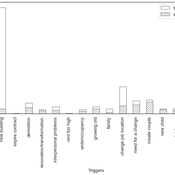
ReMoTe-S. Residential Mobility of Tenants in Switzerland: an agent-based model
Claudia Binder Anna Pagani Francesco Ballestrazzi Emanuele Massaro | Published Friday, April 01, 2022ReMoTe-S is an agent-based model of the residential mobility of Swiss tenants. Its goal is to foster a holistic understanding of the reciprocal influence between households and dwellings and thereby inform a sustainable management of the housing stock. The model is based on assumptions derived from empirical research conducted with three housing providers in Switzerland and can be used mainly for two purposes: (i) the exploration of what if scenarios that target a reduction of the housing footprint while accounting for households’ preferences and needs; (ii) knowledge production in the field of residential mobility and more specifically on the role of housing functions as orchestrators of the relocation process.
Displaying 10 of 1163 results for "Bin-Tzong Chi" clear search