Annie Waldherr
Personal homepagehttps://scholar.google.de/citations?user=IfvKs-wAAAAJ&hl=de
Professional homepagehttps://compcommlab.univie.ac.at/team/annie-waldherr/
ORCID more infohttps://orcid.org/0000-0001-7488-9138
GitHub more infoNo associated GitHub account.
Annie Waldherr is Professor of Computational Communication Science at the Department of Communication at the University of Vienna. She studied Communication Science at the University of Hohenheim and the School of Journalism and Communication at the University of Oregon. She held positions at the Faculty of Social Sciences at the University of Hohenheim and the Institute for Media and Communication Studies at Freie Universität Berlin where she also obtained her PhD in 2011. Before joining the University of Vienna in September 2020, Annie Waldherr was Assistant Professor at the Department of Communication at the University of Münster.
Research Interests
Her research focuses on public spheres, social movements and political communication under the conditions of digitalization, datafication and artificial intelligence.
Online Protest and Repression in Authoritarian Settings (OPRAS)
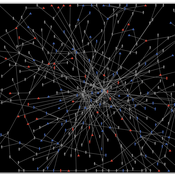
Nanda Wijermans Annie Waldherr Aytalina Kulichkina | Published Tuesday, January 27, 2026This agent-based model, developed for the study “Online Protest and Repression in Authoritarian Settings,” examines how online protest and repression evolve in authoritarian contexts and how these dynamics affect ordinary users’ attitudes and behavior on social media. The model integrates key theoretical and empirical insights into social media use and core political factors that shape digital contention in authoritarian settings. The following questions are addressed: (1) how online protest–repression dynamics unfold across different levels of authoritarianism and varying compositions of committed accounts, and (2) how ordinary users’ internal propensity to protest and their perceived probability of successful repression change during online protest-repression contestation. The model is evaluated against two empirically grounded macro patterns observed in the real world. The first is enduring protest: online protest becomes dominant as vocal protesters grow to outnumber vocal repressors, shrinking the pool of silent users and stabilizing a pro-protest majority. The second is suppressed protest: online dissent is contained as vocal repression and silence expand in response to protest, yielding a sustained majority of repressive and silent accounts. Together, these dynamics demonstrate how dissenting voices are empowered and suppressed online in authoritarian settings.
AMMA: Agent-based Model of the Media Arena
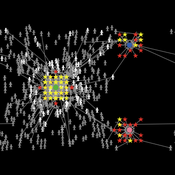
Annie Waldherr | Published Tuesday, February 11, 2014The AMMA simulates how news waves emerge in the mass media. Drawing on the ideas of public arena models and issue-attention cycles, it represents fundamental principles of public communication in a virtual media system.
Under development.